You are about to leave OurWayForward.com.
You are about to leave a GSK website. By clicking this link, you will be taken to a website that is independent from GSK. The site you are linking to is not controlled or endorsed by GSK and GSK is not responsible for its content.
What Is Ovarian Cancer?
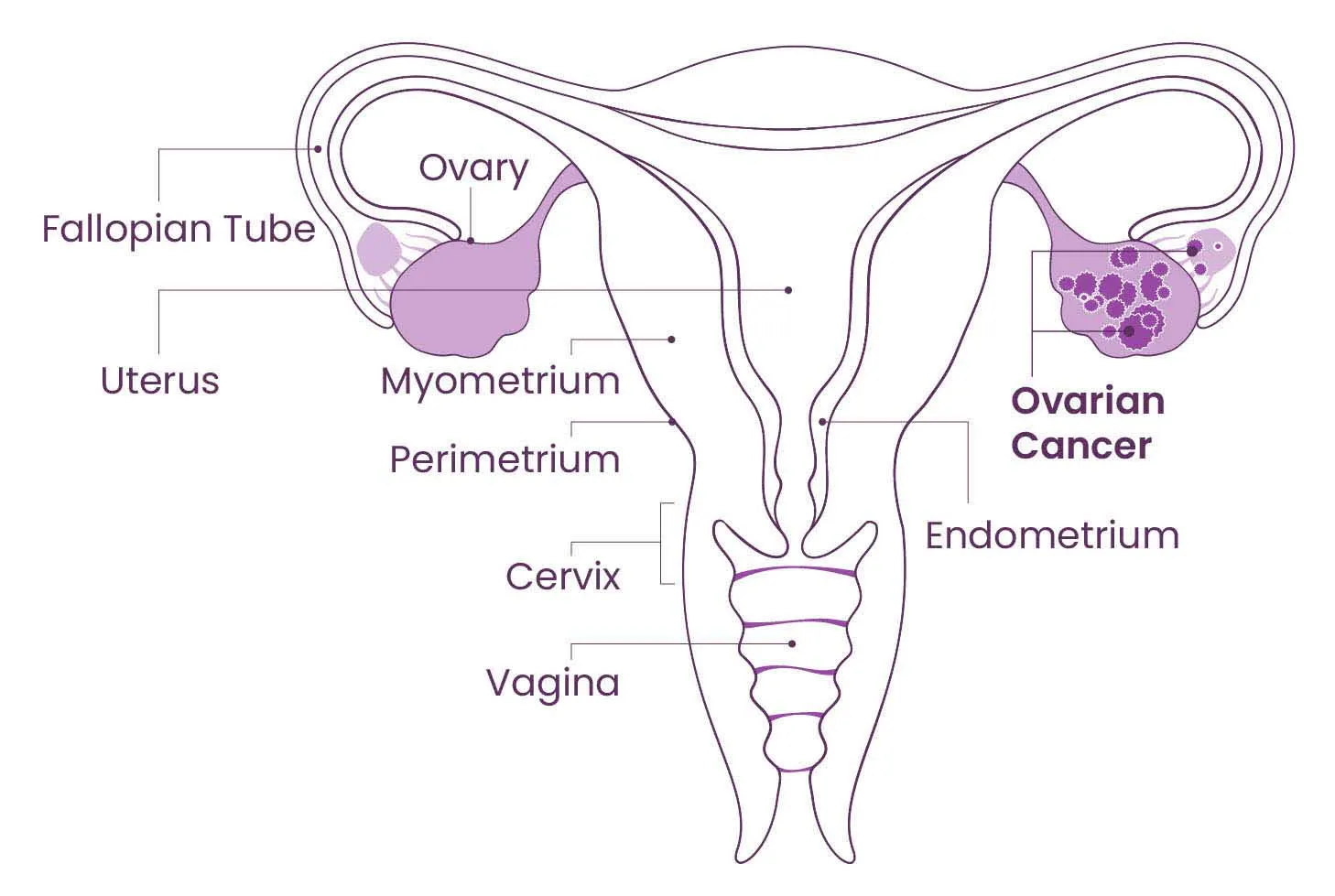
Ovarian cancer is a type of cancer that starts in the ovaries or fallopian tubes.
What Do the Ovaries Do?
Ovaries are small, oval-shaped glands that are located on either side of a uterus. The ovaries are where eggs and hormones, which control menstrual cycles and pregnancy, are produced. Ovaries continue to release an egg each menstrual cycle, until menopause is reached. The fallopian tubes are the passageway between the ovary and the uterus and are where eggs can be fertilized by sperm.
~20,000 women in the U.S. will be diagnosed with ovarian cancer annually.
What are the Signs and Symptoms of Ovarian Cancer?
The signs and symptoms of ovarian cancer can be easy to overlook or attribute to other health issues, especially early on. Symptoms often become more noticeable as the cancer develops and spreads.
Recognizing the potential signs and symptoms of ovarian cancer is important because it could lead to an earlier diagnosis, when the cancer may be more easily treated. There is no routine screening test for ovarian cancer, so it’s critical to listen to your body and note anything unusual.
Which Symptoms Are Most Often Linked to Ovarian Cancer?
- Bloating
- Clothes may feel tighter around the waist than normal
- Pelvic pain
- Pain or pressure in the abdomen or pelvis
- Trouble eating
- Loss of appetite or feeling full after just a few bites
- Urinary changes
- Greater urinary urgency or frequency
People with ovarian cancer most often report one or more of the following symptoms:
Less Common Symptoms Can Include:
- Pain during sex
- Pain or discomfort during vaginal sex
- Back pain
- Pain or discomfort in the lower back
- Fatigue
- Feeling more tired than usual, even after a full night’s sleep
- Menstrual changes
- Cycle changes or increased bleeding or discharge
- Gastrointestinal issues
- Upset stomach, heartburn, constipation, diarrhea or changes in bowel habits like urgency or pain
Symptoms are more likely to be linked to ovarian cancer if they:
- Began less than 1 year ago
- Occur frequently and are experienced more than 12 days per month
- Do not improve with typical interventions
Hear From Real Ovarian Cancer Patients
"For many years I blamed my persistent bloating, acid reflux, and irregular bowels on my diet. When I began exploring the possibility of having a child at 26, I started paying closer attention to my body. I noticed random shooting pains in my lower right pelvic area. I stopped birth control and started tracking my menstrual cycle and found it was also irregular. The final straw was a long battle with infertility that led me to see a specialist." – Kelly, ovarian cancer survivor, 30 years old
"I went to my general practitioner for a prescription refill. I had been experiencing abdominal pain and a few other symptoms — a sense of fullness, discomfort when my bladder or bowel was full, and pain during intercourse — that was worrying me, so I decided to tell my doctor about it at this appointment. I didn’t think it was serious, but I knew something wasn’t right. Honestly, if I hadn’t needed that prescription refill, I probably would have delayed going to the doctor even longer." – Sheri, ovarian cancer survivor, 64 years old
Kelly and Sheri are paid spokespeople for GSK’s Our Way Forward. These are their personal patient experiences, and yours may be different.
These are not all the possible signs/symptoms of ovarian cancer, so it is important to talk to your healthcare professional if you notice anything unusual.
What Are the Risk Factors for Ovarian Cancer?
There are several factors that can increase or decrease the likelihood of ovarian cancer.
Understanding How Family History and Biomarkers Play a Role in Ovarian Cancer

Ovarian Cancer Genetics and Biomarkers
Ovarian cancer can be a genetic disease. This means it can be caused by changes in the genetic components, or genes, which controls how cells grow and divide. Certain genetic biomarkers, or characteristics, can impact the risk of developing certain cancers and inform treatments you may be able to receive. Read on to learn how your family history plays a role, what genetic biomarkers/mutations to look out for, and how to get tested for them.

Family History
Your genes can determine many characteristics about you, such as the color of your hair, how tall you are, and whether you are at risk of developing certain diseases, such as ovarian cancer. Even though this type of cancer is specific to people assigned female at birth, you can inherit the genes that increase your risk from your mother or your father.
How do I learn more about my family history?
To understand your own health risks, it’s helpful to talk to your family members. Here are some key pieces of information to gather:
- Their sex, date of birth, and ethnicity
- Any medical conditions they know of, and the age they were diagnosed
- Any complications they had during pregnancy or other reproductive issues
- Their lifestyle habits, such as diet, exercise, and tobacco use
It’s also important to understand the health history of any immediate relatives who have passed away.
Other places you can look for information are:
- Public records (birth certificates, death certificates)
- Obituaries
- Baby books
Having these conversations can be challenging. If you’re unsure about discussing health history with your family, consider these tips:
- Don’t go at this alone—ask a sibling or close family member to join you
- Explain why you want to gather this information
- Respect your relatives’ privacy
- Listen without judgment
In addition to talking with family, doctors can perform genetic testing and look for other biomarkers that can sometimes help determine certain cancer risk, prognosis, and treatment.
Ovarian Cancer Biomarkers and Testing
Women with ovarian cancer often have a BRCA gene mutation and/or a tumor biomarker called HRD. There are tests available to help determine your BRCA and HRD status. These tests can help assess your potential risk of developing ovarian cancer or help your healthcare professional determine which treatment option might be best for you.
BRCA is identified through genetic testing, while HRD is determined through genomic testing. Read below to learn some of the basic differences between these tests.
Genetic Testing
A genetic test looks for mutations on specific parts of DNA, called genes, that may have been passed down by a family member
BRCA1 and BRCA2 testing
Testing can be done at any time, before or after diagnosis, though it is typically used to assess potential risk of cancer, particularly if you have a family history
Testing is typically done during a specialized doctor’s office visit and involves taking a blood or saliva sample
Genetic testing can help determine if a person has an increased risk for developing cancer. It does not predict whether someone will develop cancer
VS
Definition
Example
Timing
Method
Significance
Genomic Testing
A genomic test looks more widely at all of your DNA, rather than specific parts of your DNA
HRD testing
Testing is done following cancer diagnosis
Testing is done on the tumor itself and involves taking a sample of your blood or the tumor, via a biopsy or surgery
Genomic testing can help assess personalized treatment down the line
It is important to discuss with a healthcare professional whether these tests are appropriate for you or your loved one, and to discuss any test results with a healthcare professional.

What is BRCA?
BRCA is an acronym for the BReast CAncer mutation. BRCA1 and BRCA2 are human genes that produce proteins that repair damaged DNA. Every person has two copies of BRCA1 and BRCA2—one inherited from each parent. Normally, BRCA genes protect against cancer, but mutations in these genes can cause them not to work properly, which increases your risk of developing certain types of cancers, such as ovarian cancer. However, nearly 75% of advanced ovarian cancer patients do not have an inherited BRCA mutation.
Who should consider undergoing BRCA1 and BRCA2 testing?
- Those with a family history of breast, ovarian or prostate cancer, especially male breast cancer
- Those with a relative who tested positive for a BRCA mutation
- Those with a previous diagnosis of breast cancer, especially if diagnosed before age 50
- Those of Ashkenazi Jewish ancestry
- Those with a family history of Cowden syndrome, Fanconi anemia, Li-Fraumeni syndrome, Peutz-Jeghers syndrome or other inherited disorders that increase cancer risk
What does having BRCA1 or BRCA2 mean?
If a person has a mutation in either BRCA1 or BRCA2, their chance of getting breast and ovarian cancers during their life goes up. Males with these genetic mutations also have an increased risk of breast and prostate cancers. As soon as you learn about any family history of breast or ovarian cancer, or if you or a loved one were recently diagnosed with breast or ovarian cancer, you are encouraged to talk to your healthcare professional about genetic testing.
How do I undergo BRCA1 and BRCA2 testing?
BRCA testing can be done using a sample of blood or saliva. A member of your healthcare team will take a sample during an office visit and send it to the lab for genetic testing, which looks for mutations in your BRCA1 and BRCA2 genes. Testing for a BRCA gene will not definitively predict whether you will develop cancer, but it can assess your risk.
What happens if I…

Test positive for BRCA1 or BRCA2?
A positive BRCA test (also referred to as BRCA mutation or BRCAmut) means a person has a mutation in the BRCA1 or BRCA2 gene. A positive BRCA test can indicate whether someone is at a higher risk for developing cancer. This information can also help healthcare professionals decide which treatment options may be available for the person.

Test negative for BRCA1 or BRCA2?
- A negative BRCA test (also referred to as BRCA wild type or BRCAwt) means that the gene remains in its original, non-mutated state. It is important to note that even if you are BRCA negative, understanding your status could still play a role in future treatment decisions.

What is HRD?
HRD stands for homologous recombination deficiency. When DNA is repaired under normal circumstances, the process is called homologous recombination. Homologous recombination deficiency happens when this repair system no longer works properly, and therefore is unable to repair damaged DNA. When a cancerous tumor tests positive for HRD, this means that its cancer cells have a harder time repairing themselves, which can make them more vulnerable to treatments that further block this repair mechanism, such as PARP inhibitors.
What does having HRD mean?
HRD is an important biomarker for advanced ovarian cancer, as it can help predict how well the tumor may respond to different treatment options.
How do I undergo HRD testing?
HRD testing in ovarian cancer is done on the tumor itself, either through a biopsy or by testing part of the tumor after it has been removed surgically. The sample is then sent to the lab for genomic testing, which looks at all of your DNA to check for mutations. Genomic testing can help your healthcare team figure out how your ovarian cancer may behave and what treatments might work best against it.
What happens if I…
Test positive for HRD?
- If your tumor is positive for HRD, your healthcare team may consider a maintenance therapy option.
Test negative for HRD?
- Even if you test negative for HRD, there are still treatment options available. Talk to your doctor to learn more about the treatment options you are eligible for.
Is Homologous Recombination Deficiency (HRD) the same as BRCA?
BRCA mutations can cause HRD, but many ovarian tumors that test positive for HRD occur in women who do not have BRCA mutations.
HRD testing is performed on the tumor itself, using a sample of the tumor taken via biopsy or surgery. BRCA testing can usually be done during an office visit and consists of a blood or saliva sample taken by a healthcare professional.
Should I get tested for both HRD and BRCA? When?
You should consult with your doctor about which tests might be most appropriate for you and when. Even if you have ovarian cancer but no family history of it, discussing this testing with your doctor can still be helpful. This testing might help you find out if you qualify for certain treatments.
Biomarker and genetic testing may feel overwhelming, but it can be an essential part of understanding your ovarian cancer risk, prognosis, and treatment options.
How Is Ovarian Cancer Diagnosed?
Because the symptoms of ovarian cancer may be subtle, it is most often diagnosed after a person visits their healthcare professional.
There is currently no standard or routine screening test for diagnosing ovarian cancer early in patients who are at average risk and have no symptoms. Because of this, it’s important to pay attention to any changes in your body that do not feel normal and talk to a healthcare professional if you notice anything unusual.
Being persistent and proactive in keeping your doctor informed of your symptoms can help foster earlier diagnosis.
Your healthcare professional can perform a variety of tests to diagnose ovarian cancer, including imaging biopsy and blood tests.
Examples of Tests:
- Pelvic/abdominal ultrasound
- CT scan
- MRI scan
- PET-CT scan
- Chest X-ray
- Laparoscopy
- Colonoscopy
- Pelvic/abdominal ultrasound
- CA-125 blood test
- Note: CA-125 is not an indicator of all cancers.
Pap smears do not identify ovarian cancer.
What Are the Ovarian Cancer Stages?
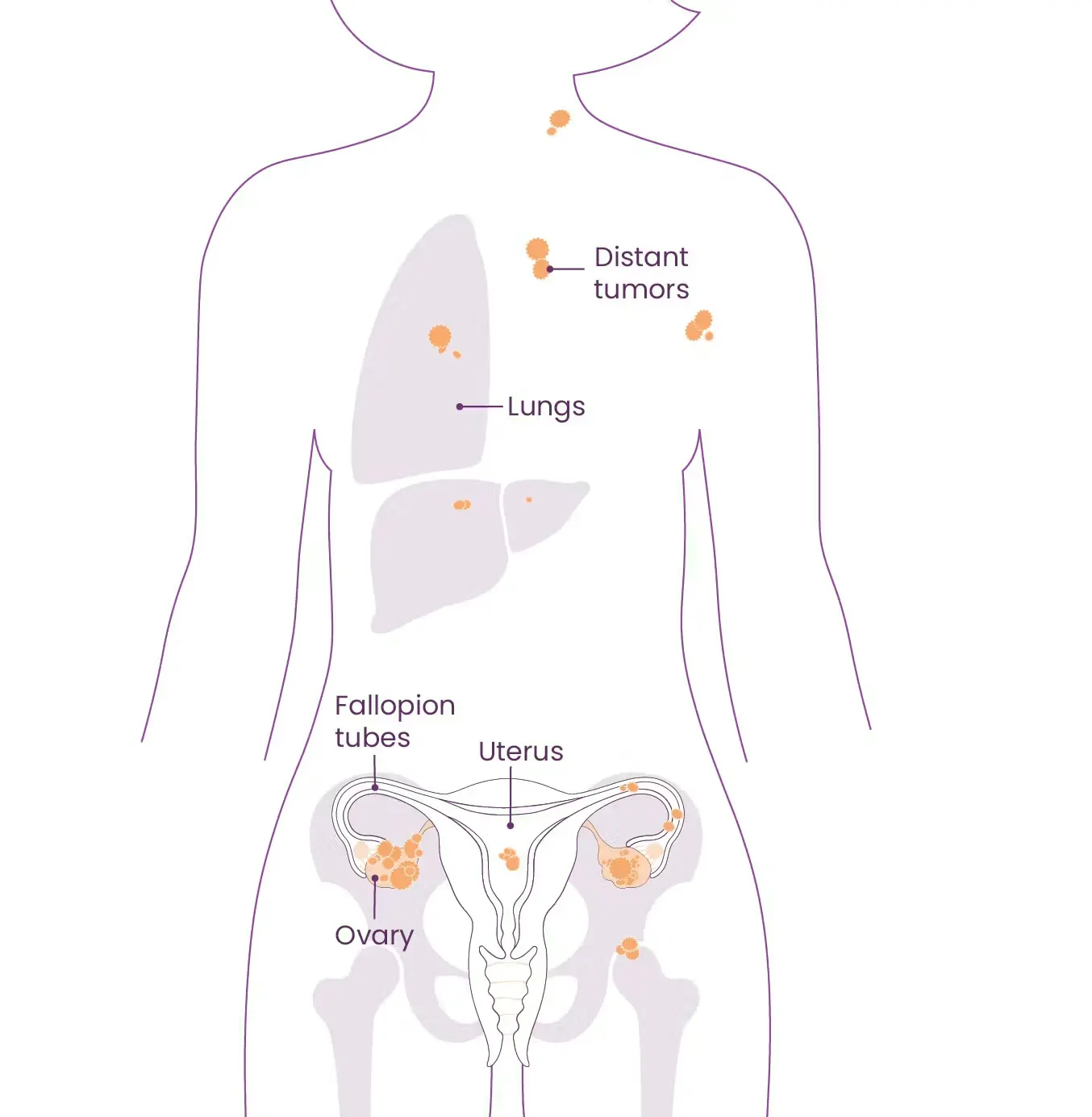
To stage ovarian cancer, tissue samples are taken during surgery. Ovarian cancer is typically given one of four stages at diagnosis.
FIGO Staging
The following staging is called the FIGO system since it was developed by the International Federation of Gynecology and Obstetrics. Refer to the diagram on this page to identify the locations of the body impacted by the staging.

Stage I
The cancer is in one or both ovaries or fallopian tubes
- Stage IA: The cancer is inside one ovary or one fallopian tube. There is no cancer on the outside of the ovary or fallopian tube
- Stage IB: The cancer is inside both ovaries or fallopian tubes but not on the outside
- Stage IC: The cancer is inside or outside one or both ovaries or fallopian tubes and has spread to the outer layer; has been found in the fluid from the abdomen and pelvis; the tissue surrounding the tumor broke

Stage II
The cancer is in one or both ovaries or fallopian tubes and has spread to other organs within the pelvis (such as the uterus or bladder)
- Stage IIA: The cancer has spread to the uterus
- Stage IIB: The cancer is on the outer surface or has grown into other organs, such as the bladder

Stage III
The cancer is in one or both ovaries or fallopian tubes and has spread to retroperitoneal (pelvic) lymph nodes
- Stage IIIA1: The cancer may have spread or grown into nearby organs in the pelvis
- Stage IIIA2: The cancer has spread or grown into organs outside the pelvis and tiny traces of cancer are found in the lining of the abdomen
- Stage IIIB: The cancer has spread or grown into organs outside the pelvis
- Stage IIIC: The cancer has spread to the outside of the liver or spleen

Stage IV
The cancer has spread to organs beyond the peritoneal (inner abdominal) area
- Stage IVA: Cancer cells have been found in the fluid around the lungs
- Stage IVB: The cancer has spread to the inside of the spleen or liver and to other organs outside the peritoneal cavity, such as the lungs and bones
Types of Ovarian Cancer
The ovaries are primarily made up of germ cells, epithelial cells, and stromal cells. Because cancer can originate in each of these cell types, there are several types of ovarian cancer, including some rarer types.
Common Types of Ovarian Cancer:
Epithelial Ovarian Cancer
- Develops in a thin layer of tissue that covers the ovaries
- Is the most common type of ovarian cancer, accounting for about 90% of cases
- Is most common in those who are postmenopausal
- Is typically diagnosed at an advanced stage
Less Common Types of Ovarian Cancer:
Germ Cell Carcinoma
- Begins in the germ cells that form eggs
- Accounts for about 5% of ovarian cancer cases
- Is found more often in young women or adolescent girls
- Usually diagnosed in early stages
Stromal Carcinoma
- Forms in the connective tissue cells that hold the ovaries together
- Accounts for about 1.2% of ovarian cancer cases
- Most commonly occurs in individuals over the age of 50
- Is diagnosed at stage I in most cases
Small Cell Carcinoma of the Ovary
- Has an uncertain cell type of origin
- Is very rare, accounting for 0.1% of ovarian cancer cases
- Mainly affects those in their 20s
- Progresses rapidly and is often detected late
Carcinosarcoma
- Rare and aggressive form of ovarian cancer
- Also known as malignant mixed Müllerian tumors
- Accounts for less than 5% of ovarian cancer cases
- Usually diagnosed in later stages
Learn Common Gynecologic Terms

Explore the GSK Help Center website to find customer service support and contact information.